Commercial banks receive a lot of applications for credit cards. Many of them get rejected for many reasons, like high loan balances, low income levels, or too many inquiries on an individual's credit report, for example. Manually analyzing these applications is mundane, error-prone, and time-consuming (and time is money!). Luckily, this task can be automated with the power of machine learning and pretty much every commercial bank does so nowadays. In this workbook, you will build an automatic credit card approval predictor using machine learning techniques, just like real banks do.
Note
The project inspiration comes from DataCamp’s Predicting Credit Card Approvals project, which served as the foundation for this work. All code and insights in this project are my own.
The data is a small subset of the Credit Card Approval dataset from the UCI Machine Learning Repository showing the credit card applications a bank receives.
- Preproccess the data and apply supervised learning techniques to find the best model and parameters for the job.
- Aim for an accuracy score of at least 0.75.
- Data Preprocessing & Exploration
-
Conducted data profiling using ydata-profiling to understand dataset characteristics.
-
Cleaned the data by removing missing values (
?). -
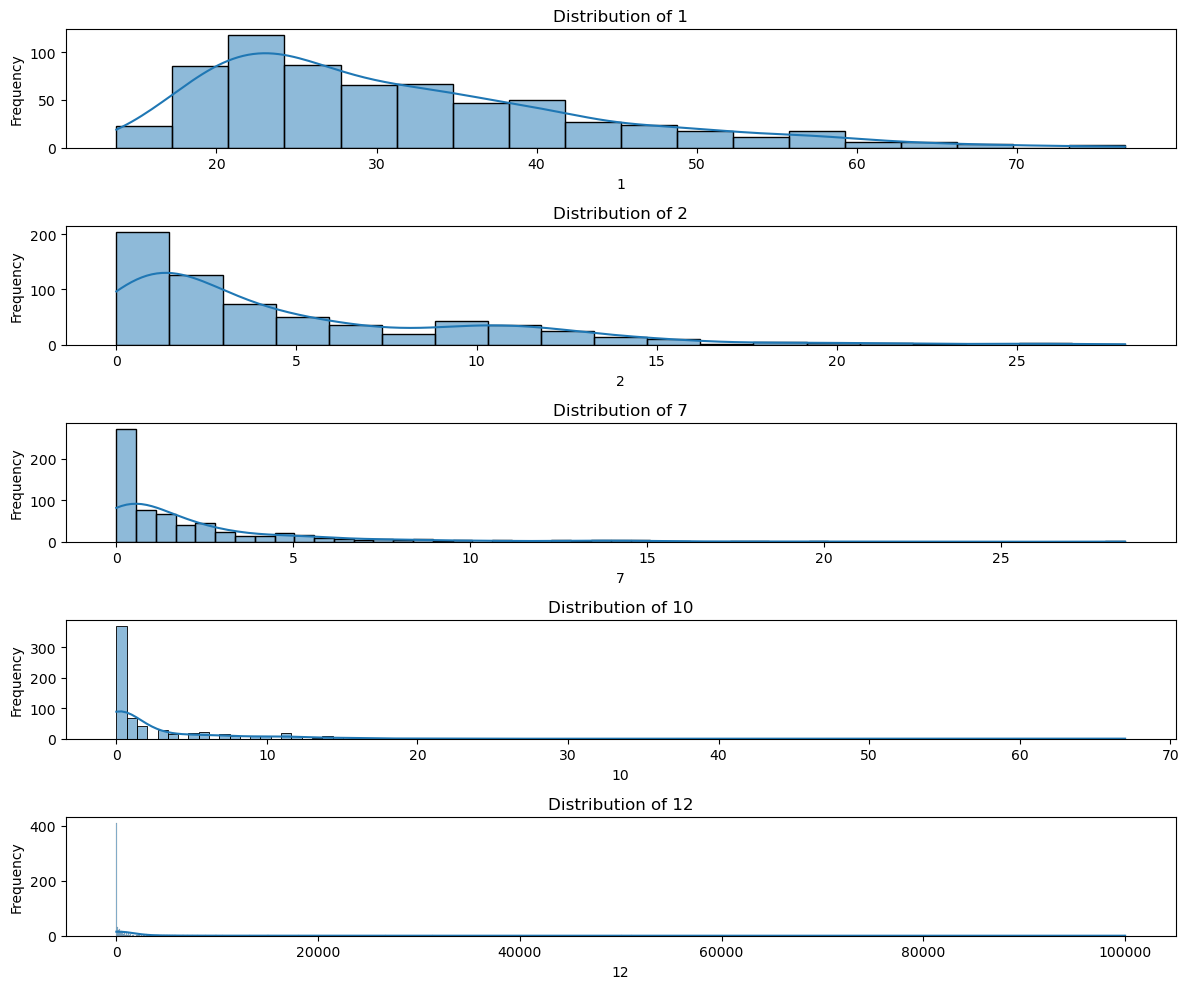
Performed Exploratory Data Analysis (EDA) to analyze numerical feature distributions.
-
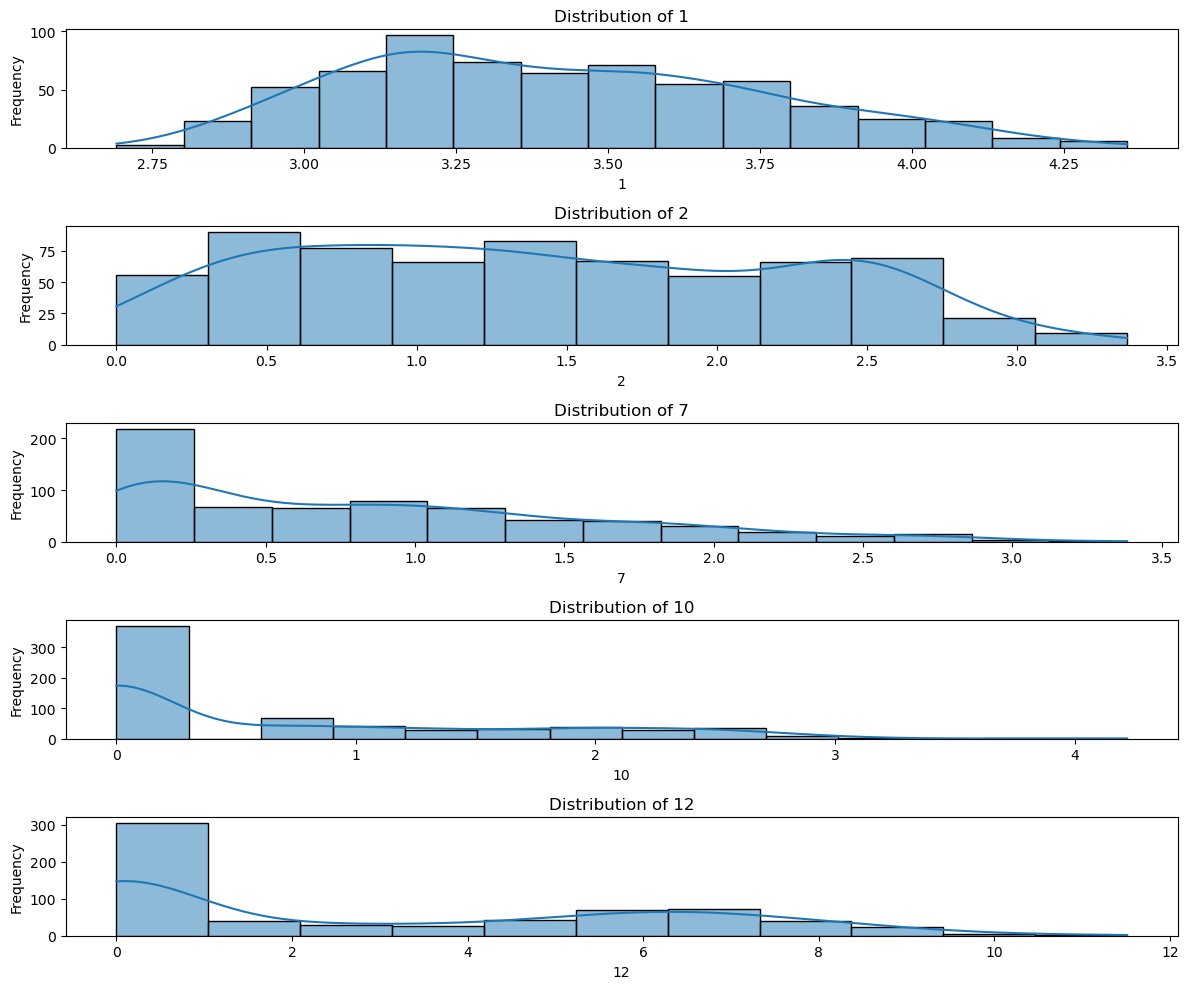
Addressed skewed features in preprocessing using Log Tranformation to improve model performance.
-
Transformed categorical variables into numerical form using binary encoding and one-hot encoding.
-
- Model Training & Evaluation
-
Split the dataset into 80% training and 20% testing, and then using Cross Validation for performance evaluation.
-
Used LazyClassifier for model selection, identifying LGBMClassifier as the best model with an accuracy of 83%.
-
Evaluated model predictions with a confusion matrix, highlighting misclassification patterns.
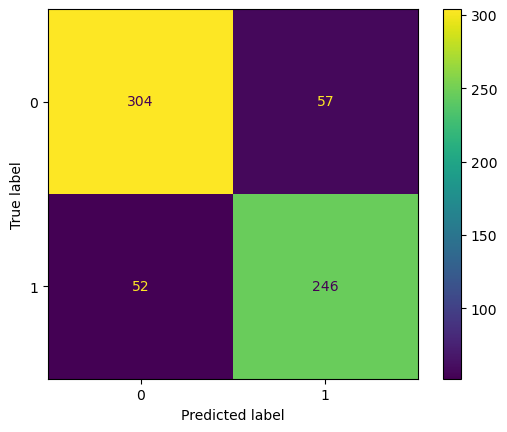
The model misclassified 57 instances where the False label was predicted as True (False Positives) and 52 instances where the True label was predicted as False (False Negatives).
-
- Model Optimization
- Performed hyperparameter tuning using
GridSearchCV, optimizing key parameters. - Achieved a 2% accuracy improvement, increasing performance from 83% to 85%.
- Performed hyperparameter tuning using
While an accuracy of 85% is a promising improvement, we must still analyze the results critically. Given that the dataset has imbalanced labels, there is a risk that the model may still favor the majority class over the minority one, leading to suboptimal predictions. To further improve its performance, we can explore additional techniques such as resampling methods, where we either oversample the minority class or undersample the majority class to create a more balanced dataset. Another approach is feature engineering, where we refine or create new features that better capture the patterns in the data.
In conclusion, while our model has improved through careful tuning, there is always room for further enhancement. By addressing label imbalance and experimenting with advanced techniques, we can work towards building a model that is not only accurate but also more robust and reliable in real-world applications.